Bridging theoretical chemistry with computational modeling
Chemolytica exists to help researchers harness the power of computational chemistry. Here, you will find guides, tutorials, and insights on molecular modeling, DFT, and machine learning -- all built to complement the lab, not replace it.
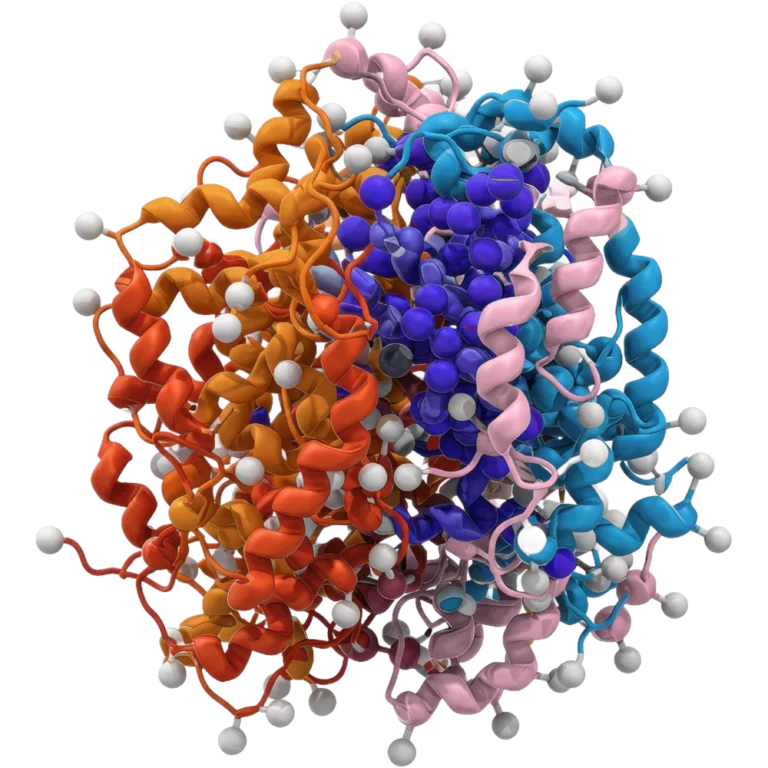
3D Model of Protein

What You'll Find Here

Knowledgebase

Learn the basics of computational chemistry. The knowledgebase includes collections for Density Functional Theory, Molecular Mechanics & Dynamics, Computational Spectroscopy, Machine Learning, and more.
Explore Knowledgebase

Projects & Case Studies

See how computational chemistry methods are applied to address chemical problems. These hands-on projects bridge theory and practice, demonstrating the real power of computational in catalysis, property predictions, and more.
Explore Projects & Case Studies

Research Insights

Get concise breakdowns of key research papers driving the field of computational chemistry forward. We will distill complex methods, results, and ideas into into actionable insights you can apply to your own work.
Explore Research Insights

Tools & Resources

Survey the tools and resources designed to accelerate your computational chemistry research and model development. From libraries and code notebooks to open-source programs, you can build, simulate, and analyze with less friction.
Explore Tools & Resources

Why Chemolytica Exists

Chemolytica stands for a new kind of science: one that keeps the hands in the lab, the mind in the data, and the eyes on what’s next.

Chemolytica exists as a bridge between theoretical chemistry and computational science. It serves as a lens that sharpens and reinforces what we see in the lab.

Chemolytica exists to make that lens more accessible, to encourage more people to combine molecular modeling fundamentals with modern techniques such as machine learning. 

Chemolytica exists to help you go beyond the surface of molecules, to see through the “black box”, to make sense of the algorithm, and to develop a deep and profound fascination with the field of computational chemistry.

Chemolytica exists not only as a platform but as a commitment to new ways of thinking — one where chemistry and computation work together to push the boundaries of discovery.

About Martin Solomon

I’m Martin Solomon, currently an undergraduate BS Chemistry student at the University of the Philippines – Los Baños. My current interests lie in reinforcement learning, stochastic processes, Monte Carlo, as well as density functional theory.

I made this website to document my learning journey in computational chemistry and to share what I know with the public. I also want to share insights and summaries of research I’ve read, comments on AI in science, and tools I use for my personal projects.

As such, this website is a place where I organize my thoughts, record what I learn, and develop ideas at the intersection of chemistry and computation.

Research & Education

My Current Research

Machine Learning-Guided Catalyst Screening for Direct Hydrogenation of Esters Into Alcohols

Work involves collecting reaction data points from peer-reviewed journals, creating a library, generating molecular descriptors, training various machine learning algorithms, and testing which model predicts the percent yield most accurately from the generated descriptors. My adviser is Prof. Mae Joanne B. Aguila, Ph.D.

Education

Bachelor of Science in Chemistry, University of the Philippines - Los Baños

2012 - Present
Relevant coursework includes Physical Chemistry (Thermodynamics, Kinetics, Quantum Chemistry), Analytical Chemistry, Organic Chemistry, Biochemistry, Differential Calculus, Linear Algebra, and Introductory Statistics. Academic interests: computational chemistry, machine learning, and chemometrics.

Looking for collaboration, partnerships, or just want to raise your comments & suggestions? You can reach out to me!
I would like to hear from you! Fill out the form below and send me a message. I'll get back to you as soon as I can.